
AI Beauty Tech in 2026: Virtual Try-On, Real Results
AI Beauty Tech in 2026: Virtual Try-On, Real Results
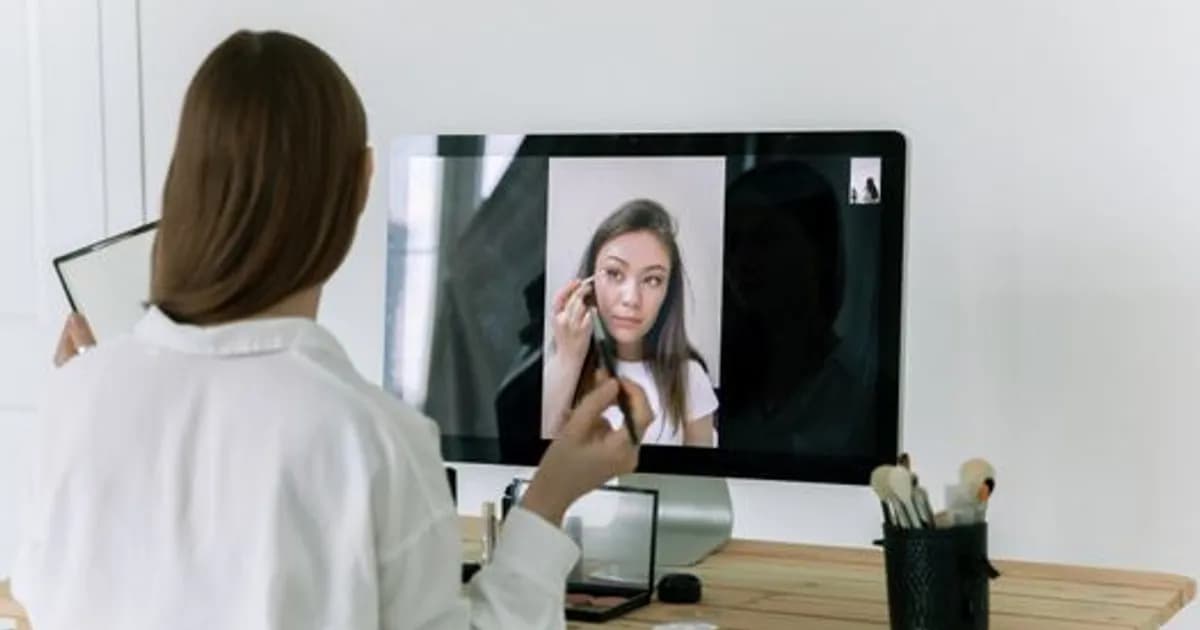
Trying on a shade of foundation used to mean a trip to the counter and a tester swipe on the back of your hand. AI beauty tech in 2026 has turned that into something you can do from a phone camera in seconds, and the underlying models have gotten good enough that the results actually resemble what shows up in the mirror rather than an obviously fake overlay.
The category has expanded well beyond virtual try-on, though. Skin analysis apps, personalized product recommendations, and AI-assisted formulation are all part of the same wave, and together they're reshaping how beauty brands sell and how consumers shop.
Virtual Try-On Has Gotten Genuinely Good
Early AR beauty filters were fun but unreliable — lipstick that smeared past lip lines, foundation shades that looked nothing like the real product under different lighting. The newer generation of try-on tools uses more sophisticated face-mapping and lighting-correction models, which has closed much of that gap.
The practical improvements show up in a few specific places:
- Lighting normalization that adjusts for the wildly different conditions of a phone camera versus a store's lighting, so a shade match is more trustworthy
- Texture rendering that shows matte, dewy, or satin finishes distinctly instead of one generic "glossy" overlay
- Skin tone matching trained on far more diverse datasets than earlier tools, addressing a long-standing complaint that virtual try-on worked poorly for darker skin tones
- Multi-product layering, letting a user preview a full look — foundation, blush, lip color — rather than one product at a time
Retailers have leaned into this because the return-on-investment case is straightforward: a customer who tries a shade virtually and is satisfied with the real product is far less likely to return it, which matters enormously for a category with historically high return rates for color-matched items.
Skin Analysis Apps Walk a Regulatory Line
Skin analysis is the more clinically adjacent side of AI beauty tech, and it's also where the regulatory picture is more complicated. An app that scans a selfie and estimates hydration, fine lines, or pore visibility is generally treated as a cosmetic tool. The moment it starts making claims about treating acne or reducing the appearance of a specific skin condition, it edges toward medical device territory.
The FDA has been actively building out its AI oversight in this space, including deploying agentic AI within its broader adverse event monitoring system to track safety signals across product categories, cosmetics included. That regulatory attention reflects how mainstream these tools have become — when millions of people are using an app's skin score to decide what products to buy, the stakes of getting that score wrong go up.
Brands building these tools have generally responded by being more careful about language: describing outputs as "estimates" or "indicators" rather than diagnoses, and routing genuinely concerning findings toward a recommendation to see a dermatologist rather than a specific treatment claim.
Personalization Is Replacing Generic Recommendations
The bigger shift in beauty retail isn't the camera trick — it's what happens after. Skin analysis and purchase history increasingly feed personalized product recommendations that go well beyond "customers who bought this also bought." Some tools now adjust recommendations seasonally, factoring in climate data for a user's location, or flag when a skincare routine includes ingredients that may not work well together.
This pattern mirrors what's playing out across retail more broadly, where AI-driven personalization is becoming the default rather than a premium feature, as covered in AI in E-Commerce 2026: Personalization Driving More Sales. Beauty has simply been one of the faster categories to adopt it, partly because visual try-on gives shoppers an unusually concrete reason to trust the recommendation engine behind it.
Where the Technology Still Misses
Virtual try-on and skin analysis tools are good, not perfect, and the failure modes are worth knowing before relying on them too heavily.
Camera quality and ambient lighting still introduce real variability. A skin analysis run in harsh overhead light can produce a noticeably different score than the same face photographed near a window, and most apps don't clearly communicate how much that variability affects the result.
Shade-matching for genuinely unusual lighting conditions — strong color-cast lighting, for instance — remains harder than well-lit, neutral settings. And skin analysis models, like any AI system trained on photographic data, can still underperform on skin tones or conditions that were underrepresented in training data, even after deliberate efforts to diversify those datasets.
A few practical habits help consumers and brands get more reliable results:
- Run skin analysis scans in consistent, diffused lighting rather than direct sun or strong overhead light
- Treat virtual try-on as a directional guide for shade family, not a guaranteed exact match — testing a small sample of the actual product is still worthwhile for major purchases
- Be skeptical of any skin score presented without an explanation of what factors drove it
- Check whether a brand's skin analysis tool has been validated across a range of skin tones, not just demonstrated on a narrow sample
AI Is Speeding Up Product Formulation Too
The same data fueling personalization is increasingly feeding back into how beauty brands develop products in the first place. Formulation teams now use AI models to predict how ingredient combinations will perform — texture, stability, how a formula reacts to humidity or heat — before committing to a physical lab batch, which shortens a development cycle that traditionally involved many rounds of trial and error.
This doesn't replace chemists and formulators, but it narrows the search space they're working in. Instead of testing dozens of ingredient ratios from scratch, a formulation team can use predictive modeling to identify the handful of combinations most likely to hit a target texture or performance profile, then validate those in the lab.
Brands have also started using aggregated skin analysis data, stripped of personally identifying details, to spot demand patterns — a spike in requests for products addressing a specific concern in a particular climate or season, for instance. That feedback loop between consumer-facing AI tools and back-end product development is relatively new, and it's part of why beauty brands have been some of the more aggressive adopters of AI tooling outside of pure marketing and customer service use cases.
The result is a noticeably faster cycle from spotting a consumer need to having a product on shelves addressing it, though the actual safety testing and regulatory review process for new formulations hasn't gotten any faster — AI speeds up discovery, not the parts of product development that exist specifically to slow things down for safety reasons.
Conclusion
AI beauty tech in 2026 has matured from a novelty filter into a genuinely useful shopping and skincare tool, with virtual try-on accuracy and skin analysis personalization both improving substantially. The honest caveat is that lighting, camera quality, and training data diversity still introduce real limits, so the smartest way to use these tools is as a starting point rather than a final answer. If you're evaluating beauty AI tools for your own routine or your brand's storefront, look for ones that are transparent about their limitations — that transparency is usually a good signal the underlying model was built carefully in the first place.
Comments
Loading comments...