
AI Art Restoration 2026: Saving Masterpieces with Data
AI Art Restoration 2026: Saving Masterpieces with Data
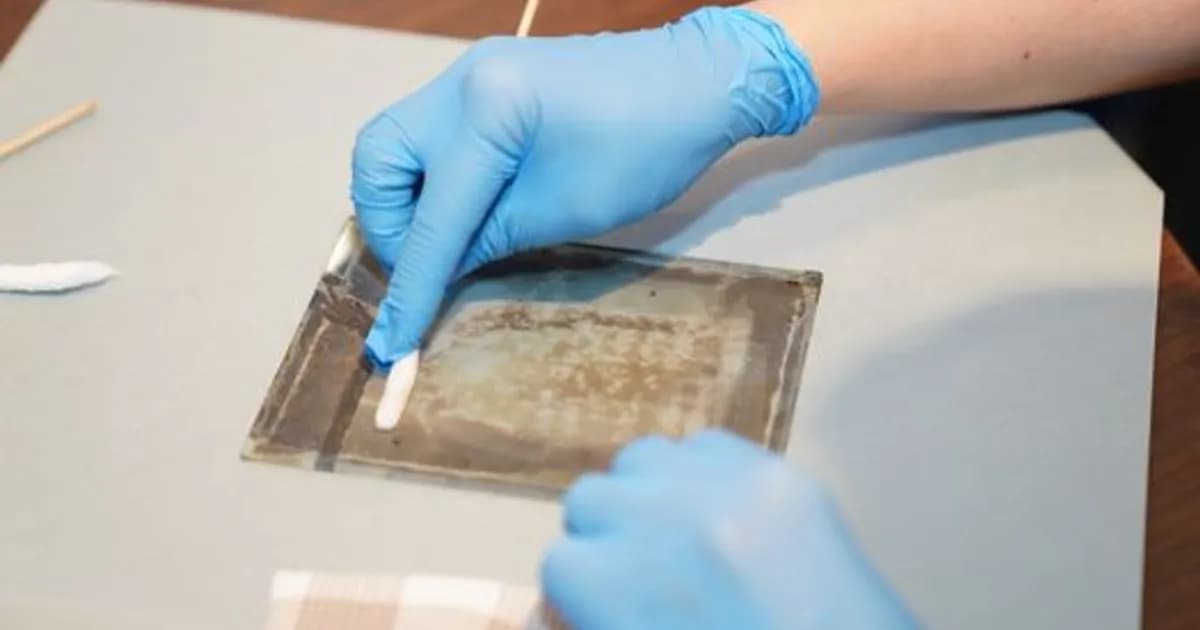
AI art restoration has become a meaningful addition to how major museums and conservation labs approach damaged and deteriorating artworks in 2026, giving conservators a much richer analytical picture before they make any irreversible physical decision about a piece. Traditional restoration has always carried real risk — every cleaning, every retouch, every structural intervention on a centuries-old painting is at least partially irreversible, which is exactly why conservators have historically moved slowly and conservatively.
AI tools haven't changed that fundamental caution, but they've given conservators considerably more information to work from before they pick up a brush or solvent, mapping damage and modeling potential outcomes in ways that used to require either guesswork or destructive testing on the artwork itself.
What AI Art Restoration Is Actually Doing in the Lab
Most AI art restoration applications fall into a few distinct categories, each addressing a different part of the conservation process:
- Damage mapping — computer vision analysis of high-resolution scans, X-ray, and infrared imagery to precisely document cracking, paint loss, and underlying structural issues invisible to the naked eye
- Virtual restoration modeling — generating a digital reconstruction of what a damaged or faded artwork likely looked like originally, based on training data from similar period, artist, and style references
- Pigment and material analysis — pattern-matching spectral data against known historical pigment compositions to help conservators understand and date materials used in the original work
- Restoration outcome simulation — letting conservators preview how a proposed cleaning or retouching approach might look before committing to it on the physical artwork
That last capability — simulating an intervention before performing it — is arguably the most practically valuable, since it lets conservators evaluate multiple restoration approaches digitally and choose the most conservative one likely to achieve the desired result, rather than committing to an irreversible physical step based purely on professional judgment and experience.
The Most Famous Use Case: Filling In What's Lost
Some of the highest-profile AI art restoration projects have involved digitally reconstructing portions of damaged or destroyed artworks — sections lost to fire, flood, vandalism, or simply centuries of paint loss and flaking. Projects working with severely damaged Old Master paintings and even reconstructing details from artworks destroyed in events like wartime bombing have used AI models trained on an artist's broader body of work, historical photographs, and period-appropriate stylistic conventions to generate plausible reconstructions of missing sections.
These reconstructions are almost always presented as digital scholarship and exhibition material rather than something physically painted onto the original artwork. Conservation ethics generally hold that an AI-generated guess about lost detail, however well-informed, shouldn't be physically applied to an irreplaceable original — the value lies in scholarly and public understanding of what was likely there, not in literally repainting it back onto the piece itself.
Why Conservators Remain Cautious
The conservation field has a long, hard-won institutional memory of restoration efforts gone wrong — overzealous nineteenth and twentieth century interventions that did real damage to artworks in the name of "improving" or "completing" them according to the restoration fashions of their era. That history makes contemporary conservators understandably skeptical of any tool, including AI art restoration software, that might tempt restorers toward overconfident intervention.
Professional conservation bodies have generally embraced AI tools for analysis and planning while maintaining firm boundaries around physical intervention, treating AI-generated reconstructions explicitly as hypotheses to inform research and exhibition context rather than templates for actual restoration work performed on the physical object. That distinction — AI as an analytical and scholarly tool versus AI as a basis for irreversible physical changes — is the consensus position holding across most major conservation institutions in 2026.
Detecting Forgeries and Verifying Authenticity
A related and growing application is using AI to assist in authentication and forgery detection, analyzing brushstroke patterns, pigment composition, and stylistic consistency against a known body of an artist's verified work. This has become particularly relevant given how sophisticated art forgery techniques have grown, and AI-assisted analysis gives authentication experts an additional data-driven layer alongside traditional connoisseurship and chemical material testing.
Museums and auction houses have been notably more willing to invest in this authentication-focused application than in restoration modeling, since the commercial and reputational stakes of authenticating a multi-million dollar artwork incorrectly are immediate and severe, making the cost of additional AI-assisted verification easy to justify even when the underlying technology and methodology are still relatively new.
Democratizing Access to Conservation Expertise
Smaller museums and regional institutions have historically had far less access to advanced conservation science than major national museums with dedicated, well-funded conservation labs. AI-assisted analysis tools, particularly cloud-based services that can process high-resolution scans without requiring an institution to build out its own specialized imaging and analysis infrastructure, have started narrowing that gap somewhat, letting smaller institutions get a more sophisticated read on a damaged piece than they could previously afford through in-house expertise alone.
That access still isn't equal — major museums retain considerably more resources and specialist staff to act on what AI analysis reveals — but the analytical gap between large and small institutions has narrowed in ways that benefit the broader preservation of art held outside the world's best-funded collections.
Training the Next Generation of Conservators
Conservation training programs at major universities have started incorporating AI art restoration tools into their curricula, treating digital damage mapping and restoration simulation as a standard part of the modern conservator's toolkit rather than a specialized add-on. Students now learn to interpret AI-generated damage maps and outcome simulations alongside the traditional chemistry, art history, and hands-on technique that conservation training has always emphasized.
That curriculum shift reflects a broader recognition that AI art restoration skills are becoming as fundamental to the profession as familiarity with solvents and pigment chemistry has always been. Conservation educators generally frame this as additive rather than a replacement for traditional training — a conservator still needs deep material knowledge and steady hands, but increasingly also needs fluency in reading what an AI damage analysis is and isn't telling them about a given piece.
Funding and Institutional Investment
Major grant-making bodies and museum foundations have started directing dedicated funding toward AI art restoration research, recognizing that the upfront cost of high-resolution imaging equipment and the computational tools to analyze it represents a real barrier for many institutions. Several large museums have partnered directly with university computer science departments and technology companies to develop restoration-focused AI tools tailored to conservation needs rather than relying solely on general-purpose image analysis software adapted after the fact.
That institutional investment has accelerated how quickly AI art restoration capabilities have matured over the past several years, moving from experimental pilot projects at a handful of flagship institutions to tools now used routinely across a much broader range of conservation labs internationally.
The Bottom Line
AI art restoration in 2026 has become a genuinely useful analytical and planning tool for conservators, helping map damage, model potential interventions, and reconstruct lost details digitally without requiring conservators to abandon the careful, conservative physical restoration ethics the field has built over generations. The technology informs decisions; it hasn't replaced the conservator's hand or the field's deep institutional caution about irreversible intervention, and that division looks likely to hold for the foreseeable future.
For related coverage of AI in cultural heritage and creative fields, see AI in Archaeology in 2026: Finding Buried Sites Faster and AI Art vs Human Artists 2026: The Great Creative Debate. The Getty Conservation Institute (https://www.getty.edu/conservation) publishes ongoing research on conservation science and emerging technology applications in the field.
Comments
Loading comments...